Geography at Parkfields
Geography at Parkfields is so much more than just geography. Ex-President Barack Obama summed it up in his 2012 quote, “The study of geography is about more than just memorizing places on a map. It’s about understanding the complexity of our world, appreciating the diversity of cultures that exist across continents. And in the end, it’s about using all that knowledge to help bridge divides and bring people together.”
At Parkfields, we want pupils to be fascinated with, and knowledgeable about their world. We want them to understand both their place within it as well as their responsibility towards it. Our curriculum aims to inspire our pupils by introducing them to the amazing physical and human features of our world but to also help them understand the fragility of their world and the issues many people face.
Geography is not just about reading maps and locating countries in the world. These skills are taught and developed throughout each year, but we also aim to link Geography with Science, English, Maths and PSHE to give the children an understanding of the link between our world and their place in it.
Children are given key questions such as; ‘Should a visitors’ centre be developed in the Lake District and, ‘Is there a link between wealth and life expectancy across the world?’ We look at live statistics across the world so that there is an appreciation of our lives in a higher income country.
Data is collected and analysed and different geographical processes are learnt such as deforestation, climate change, the hydrological cycle and glaciation. Controversial issues are debated such as whether development should happen in the Amazon Rainforest so that children have an understanding of the causes and impacts of development.
We use Digimaps for Schools to develop an understanding of Geographic Information Systems and become global virtual travellers. This system is also used in the Crime topic within which children look at the geography of crime and how geography is used to solve crimes.
In Year 7, children are given the opportunity to go to Calshot Activity Centre in Southampton to develop their fieldwork skills and experience ‘real geography’. With specialists, children investigate coastal erosion, the journey of a river from source to mouth and complete an orienteering course. There is also a key link to marine biology as children complete a Seine Netting activity and a beach comb.
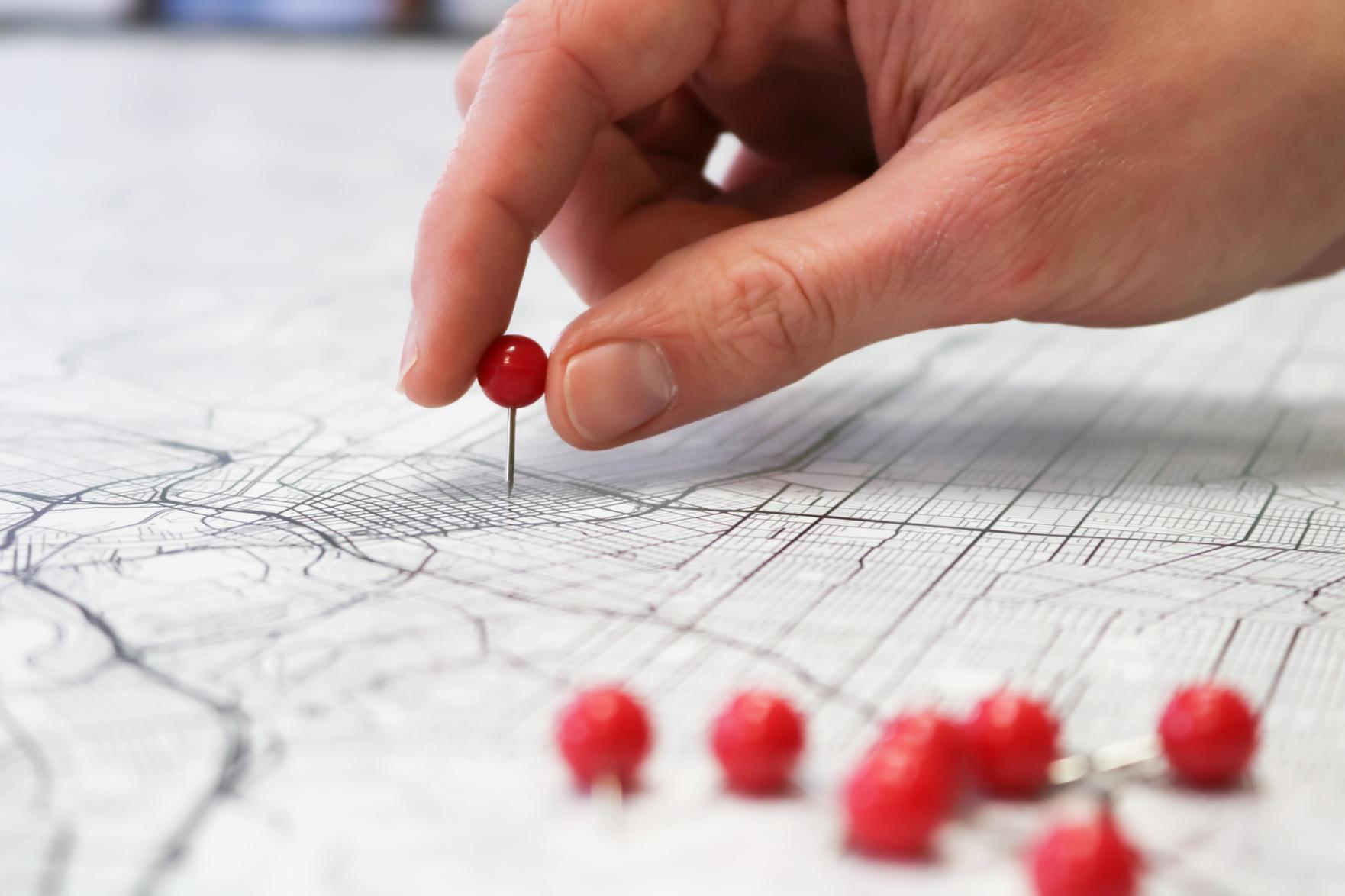
Photo by GeoJango Maps on Unsplash
The Geography Curriculum
A high-quality geography education should inspire in pupils a curiosity and fascination about the world and its people that will remain with them for the rest of their lives. Teaching should equip the pupils with knowledge about diverse places, people, resources and natural and human environments, together with a deep understanding of the Earth’s key physical and human processes. As pupils progress their growing knowledge about the world should help them deepen their understanding of the interaction between physical and human processes, and of the formation and use of landscapes and environments. Geographical knowledge, understanding and skills provide the framework and approaches that explain how the Earth’s features at different scales are shaped, interconnected and change over time.
The aim for the geography curriculum is to ensure that all pupils:
-
develop contextual knowledge of the locations of globally significant places - both terrestrial and marine - including their defining physical and human characteristics and how these provide a geographical context for understanding the actions of processes;
-
understand the processes that give rise to key physical and human geographical features of the world, how these are interdependent and how they bring about spatial variation and change over time;
It is also important that pupils are competent in the geographical skills needed to:
-
collect, analyse and communicate with a range of data gathered through experiences of fieldwork that deepen their understanding of geographical processes;
-
interpret a range of sources of geographical information, including maps, diagrams, globes, aerial photographs and Geographical Information Systems (GIS);
-
communicate geographical information in a variety of ways, including through maps, numerical and quantitative skills and writing at length.
Curriculum Overview

|
Curriculum Overview - Geography - Year 5 | [pdf 75KB] |

|
|
|
Curriculum Overview - Geography - Year 6 | [pdf 85KB] |
|
|
|
Curriculum Overview - Geography - Year 7 | [pdf 90KB] |
|
|
|
Curriculum Overview - Geography - Year 8 | [pdf 80KB] |
|
|
|
Curriculum Overview - Geography - Whole School | [pdf 43KB] |
|